High blood pressure, cardiovascular disease, and circulation-related concerns require proper medical evaluation and treatment. Acupuncture may offer valuable complementary support by promoting relaxation, helping manage stress, and potentially improving local blood flow and circulation. By stimulating the nervous system and supporting the body’s natural regulatory responses, acupuncture may contribute to overall well-being and cardiovascular wellness when combined with appropriate medical care. It complements, but does not replace, your physician’s treatment for heart and vascular conditions.
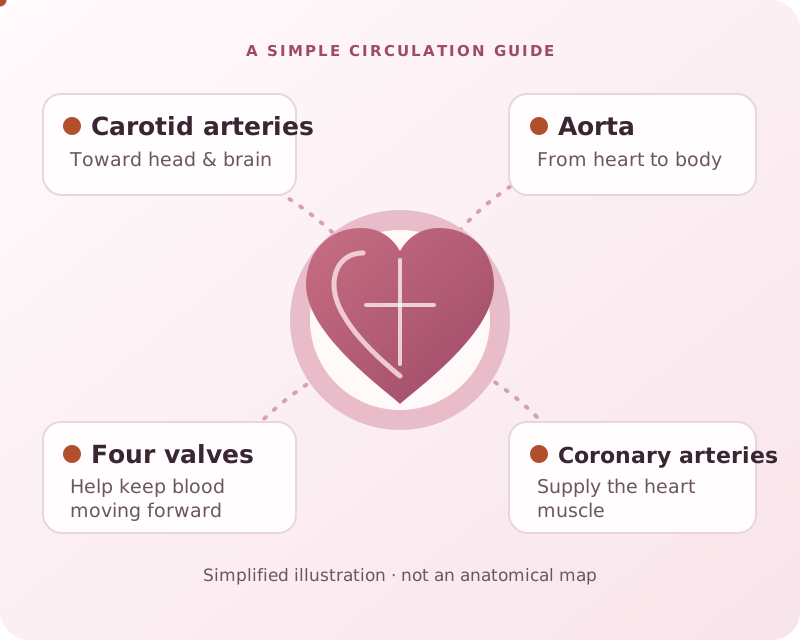
Your heart works together with a network of major vessels — the aorta, the common carotid arteries carrying blood to the brain, the coronary arteries feeding the heart muscle itself, and four valves (aortic, mitral, tricuspid, and pulmonic) that keep blood moving in one direction.
High blood pressure can damage artery walls over time and raise the risk of atherosclerosis, heart attack, stroke, kidney disease, and other serious complications. It often has no symptoms, which is why regular readings and medical follow-up matter.
Palpitations, valve narrowing or leakage, aneurysms, calcification, clots, blockages, and abnormal heart rhythms are medical conditions that require appropriate medical care. Acupuncture can play a complementary role in supporting the body’s natural balance, circulation, and overall well-being, while working alongside your physician’s care.
When any of these structures are affected by a condition such as narrowing, calcification, or a clot, your cardiologist or primary care physician can provide appropriate medical care, while acupuncture may complement treatment by supporting relaxation, balance, and overall well-being.
Where acupuncture may fit in is as a natural, drug-free therapy that supports the body’s relaxation response, promotes balance, eases everyday stress and tension, and encourages the body’s natural ability to restore and maintain overall well-being. Many patients incorporate acupuncture into their healthcare routine to complement their physician’s care.
If you have a diagnosed heart or vascular condition, continue the treatment prescribed by your physician; acupuncture can be a complementary part of your overall wellness plan, supporting relaxation, balance, and the body’s natural healing processes.
Cardiovascular wellness: where acupuncture may offer supportive care
Acupuncture is offered as complementary support for the whole person, alongside — never in place of — the medical care for your heart and vascular health.
Blood pressure and arterial conditions
Hypertension and arterial conditions benefit from ongoing medical monitoring and appropriate care. Acupuncture may be a valuable addition to your overall cardiovascular wellness by supporting relaxation and healthy circulation — both important to cardiovascular well-being. Less stress may mean less activation of the stress response and less temporary blood-vessel constriction and cardiovascular strain. Continue any prescribed medication and monitoring.
Palpitations and stress
Stress and tension can make your heartbeat feel more noticeable. Acupuncture may play a valuable role in promoting relaxation, calming the body’s stress response, and supporting overall balance and well-being. If palpitations are persistent or severe — or occur with chest pain, fainting, or shortness of breath — medical evaluation is important.
Living with vascular and valve conditions
For patients living with valve disease, blood clots, aneurysms, stenosis, or vascular blockages, acupuncture may provide supportive care — helping them feel better and function more comfortably while their cardiovascular condition continues to receive appropriate medical management. It does not treat these conditions.
Whole-person support
When complementary care is appropriate, acupuncture can play an active and supportive role for the whole person — not just the condition. Each session can be personalized to promote comfort, deeper relaxation, better sleep, improved coping, and a stronger sense of well-being while living with a chronic condition, working alongside your physician’s treatment plan.
Traditional Chinese Medicine perspective — a holistic approach to balance
Traditional Chinese Medicine looks at the body as a connected whole. Concepts such as Qi, meridians, and the relationship between different organ systems (“The Five Elements”) help acupuncturists understand patterns of imbalance that may affect how you feel. In this traditional approach, the Heart and Liver are considered connected with areas such as circulation, tension, sleep, energy, and emotional well-being.
These traditional concepts help guide personalized acupuncture care and are different from a medical diagnosis. Acupuncture can be incorporated as part of a comprehensive approach to supporting overall balance, relaxation, circulation, and well-being, complementing care for patients who are also receiving medical care for diagnosed heart, liver, kidney, or vascular conditions.
If your cardiologist or primary care clinician says acupuncture is appropriate, tell the acupuncturist about your diagnoses, medications, blood thinners, pacemaker, implanted devices, and recent procedures before any session.
Call 911 for emergency signs
Do not book or wait for a wellness appointment when symptoms could signal a heart attack, stroke, aneurysm, or hypertensive emergency.
Call 911 for
chest pressure or pain, especially with sweating, nausea, or pain spreading to the arm, jaw, or back
sudden trouble breathing, fainting, or a new severe irregular heartbeat
face drooping, one-sided weakness or numbness, confusion, or trouble speaking
a sudden severe headache or sudden severe chest, abdominal, or back pain
blood pressure at or above 180/120 with concerning symptoms
Continue every medication and follow-up your medical team has prescribed. Acupuncture must never delay emergency care, heart testing, blood-pressure treatment, anticoagulation, or cardiology follow-up.
Where complementary care may fit
A modest, symptom-focused role
A quiet acupuncture session may help some people feel calmer. That relaxation goal is separate from treating the underlying heart or vascular condition.
Care may focus on everyday tension or sleep difficulty when your physician has ruled out urgent causes and agrees complementary care is reasonable.
Bring an updated medication list and explain any procedures, implanted devices, blood thinners, or activity restrictions so the visit can be planned conservatively.
Plan supportive care with Dr. Tsai, DOM
Dr. Tsai is a licensed Doctor of Oriental Medicine who reviews your health history, medications, current medical care, goals, and comfort before recommending acupuncture or another clinic service.
For a diagnosed condition, your physician or specialist remains responsible for diagnosis and treatment. Care here is complementary and should never delay testing, medication, therapy, surgery, or emergency care.
No. Heart disease needs medical diagnosis and treatment. Acupuncture may be used only as complementary support for goals such as relaxation or coping, when your physician says it is appropriate.
Can acupuncture clear blocked arteries or blood clots?+
No. It does not clear plaque, dissolve clots, or reopen blocked arteries. Those conditions require urgent or ongoing medical treatment.
Can I stop my blood-pressure medication if I feel better?+
No. Never stop or change medication without the clinician who prescribed it. Feeling relaxed after a session does not show that hypertension is controlled.
What if I take a blood thinner?+
Tell both your physician and acupuncturist. Blood thinners can increase bruising or bleeding, so the practitioner needs that information before deciding whether and how to proceed.
Is electroacupuncture safe with a pacemaker?+
Electrical stimulation may be inappropriate with an implanted electrical device. Disclose the device and obtain medical guidance before considering electroacupuncture.
Discuss complementary support safely
If your medical team has evaluated your heart or circulatory concern and you want to discuss gentle support for stress, tension, or sleep, Healing Point Wellness Clinic can review whether a conservative complementary visit fits your care plan.